Adventurer's Coffer
Personal, never-full storage for the supplies you burn through every run - reagents, potions, bandages, recall scrolls, and your spare exceptional gear. Stock it once, save a loadout, and pull your kit back together before the next run instead of hunting a vendor every time.
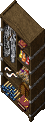
Your stock belongs to your account
Everything you stow is bound to your account, not to the chest. The coffer itself is furniture - a window into your account's supply pool. Open any coffer, anywhere, and you see the same stock; every character on your account shares it; put a coffer in your house and another on your ship and they are one inventory. And if the furniture is ever destroyed - your house collapses, your ship goes down with the coffer aboard, anything - you lose nothing: buy or place another coffer and your whole stash is right there behind it.
The flip side is deliberate: handing a coffer to another player hands over empty furniture. To move bulk stock between players, withdraw it - commodity deeds exist for exactly that - and trade the goods themselves.
Securing it
The coffer opens when it's locked down in a house, sitting in your bank box, tucked inside a secured container in your house that you have access to, or carried in your own backpack, so you can restock anywhere. Lock it down in a house and set who has access, and it's ready for the whole household.
What it holds
| Stock | |
|---|---|
 |
Reagents - the full spell-component set |
 |
Potions - heals, cures, refreshes, and the buff line |
 |
Bandages - stacked deep for long fights |
|
Containers - empty backpacks, bags, plain pouches, and red magic-trapped pouches |
 |
Recall Scrolls - the runebook and atlas charge fuel, filed under Other |
|
Crafting materials - boards, ingots, leather, and cloth, every tier (premium shelf) |
|
Gems - all nine, from amber to diamond (premium shelf) |
|
Naval (Boating) - ship bombs, ship repair kits, spyglasses in every metal tier, and fishing poles in every tier |
Base weapons and armour live here too, alongside the consumables. The Boating tab lists a spyglass row for every steel, Moorite through Lyonspireite - each tier up carries more charges and a longer sight range, and every glass the coffer dispenses comes out Exceptional at full charges for its tier. Fishing poles get the same per-tier rows. Deposits bank by tier: drop an exceptional, never-used Lyonspireite glass in and it files into its own row and comes back exactly as stored (see Storing gear).
The Weapons tab carries the skinning knife in every steel as well: a higher-tier knife holds more skinning charges, and a withdrawn knife always comes out Exceptional with the full charge bank for its steel.
The Instruments tab holds lutes only, with seven rows: plain wood plus the six colored wood tiers. Every tier is visible even when its count is zero. Claiming supplies from the supply stone tops each lute row up to 60,000; an account with empty rows can claim supplies again. Opening the coffer itself does not refill stock.
The Containers tab keeps each empty container type separate. Magic-trapped pouches are shown solid red both in the coffer and after withdrawal, so they cannot be confused with an ordinary pouch; springing one clears the marker and turns it back into a plain pouch. Containers must be empty: the coffer counts them, it doesn't keep what's inside them.
Use Add all in backpack from the coffer's left-click menu to file every supported item it can safely take in one pass. When you type in the search box, the coffer searches its whole catalog across every stock tab, so you do not need to guess where an item was filed first.
Crafting materials & commodity deeds
The Materials tab stores the bulk crafting stock - boards, ingots, leather, and cloth, in every tier - so a crafter can empty a full pack into the coffer and never carry the weight again. Drop the stacks in like anything else; each tier files into its own row. (Raw harvest forms - logs, ore, and hides - aren't stored here; turn them into boards, ingots, and leather first.)
Pulling them back out, you get a choice on every row:
- Withdraw drops a loose stack into your pack, same as any other coffer item.
- As Deed packs the amount you ask for into commodity deeds - each deed is a 5,000-unit bundle that weighs one stone no matter what it holds. Ask for 25,000 boards and you get five deeds; because every deed of a resource is identical, they stack into one slot (shown with a count) and drag-split like any normal item. That's how you carry tens of thousands of boards to the shipwright's bench without being crushed by the load, and you can craft straight from the deeds - the bench cashes in whole bundles as it needs them.
Cashing them in. Drop a deed (or a stack of them) in your bank box or a commodity deed box and double-click to redeem the full amount the stack holds. Crafting also pulls from deeds automatically, redeeming whole 5,000 bundles and leaving any change loose. Deeds come in fixed 5,000 bundles so they stay identical and stack - withdraw at least 5,000 to make one.
Shelf upgrades
Four shelves are premium: Affinity, Mastery, Materials, and Gems. A fresh account has them locked - the tab shows a padlock and an unlock offer instead of its rows. Open one for a one-time 100,000 gold fee (paid from your pack or bank) via the locked tab itself or the Settings tab's Shelf Upgrades list. Unlocks are permanent and belong to your account - buy the Gems shelf once and every coffer you ever open has it.
While a shelf is locked it neither accepts nor dispenses - a bulk Add all in backpack sweep leaves those items in your pack rather than filing them behind the paywall, and resupply skips (and names) any loadout targets sitting on a locked shelf.
Starter coffers come fully unlocked and fully stocked. A coffer bought from the Store ships with the premium shelves locked.
Loadouts
Each catalog tab carries a SET ALL SHOWN field: type a quantity and it sets that target for every item on the tab - handy for "five of every buff potion, ten of every heal." Fine-tune individual rows on the Loadout tab and commit them together with SAVE ALL. Withdrawing defaults to 1, so you take exactly what you mean to instead of the whole stack.
When you press RESUPPLY, matching items in your backpack and matching weapons, armor, or clothing already worn on your equipment layers all count toward the target. The coffer withdraws only the missing amount; items in your bank do not count as supplies on hand.
Auto-fill runes. With the Auto-fill runebooks and atlases on resupply option on (Settings tab, on by default), every resupply also tops up each runebook and Runic Atlas in your pack with recall charges, drawn straight from the coffer's stocked Recall Scrolls. No loose scrolls hit your pack; filling stops when the coffer's scroll stock runs out.
Storing gear
The coffer only accepts Exceptional, fully-repaired weapons and armour. Store an exceptional Lyonspireite halberd and that's exactly what comes back out - material name and Exceptional quality intact, not a stripped-down "a halberd."
Spyglasses follow the same rule with one extra condition: only an Exceptional, full (never-used) spyglass may be stored - a partially-spent glass is refused (the coffer files items by tier and count, so it can't preserve a half-used charge bank). A stored exceptional spyglass files into its own metal-tier row and comes back out at full charges, exactly as it went in. Fishing poles bank under the same rule: only a pristine Exceptional-crafted pole (full charges, never cast) is accepted, filed by its wood tier. Skinning knives join them: only an Exceptional knife with its full, never-used charge bank is accepted, filed by its steel, and dispensed back at full tier charges.
Lutes must be Exceptional, never played, and at full charges for their wood tier. Slayer instruments and all non-lute instruments are refused. Withdrawn lutes retain their wood tier and come out Exceptional with a full charge bank.
Trading it
The coffer trades as furniture only - your stock stays bound to your account, so a sold, gifted, or stolen coffer opens onto the new holder's own pool, never yours. Move bulk goods between players with commodity deeds or plain withdrawals.
A shelf, not a chest
Your coffer stands as a tall, stocked storage shelf rather than a plain box. It's furniture: lock it down, then use the house Turn option to face it south or east to fit the room.